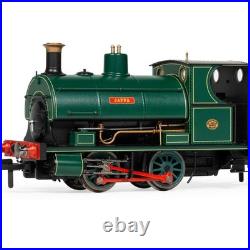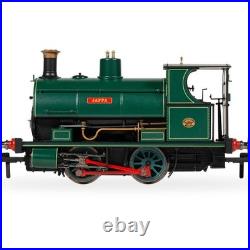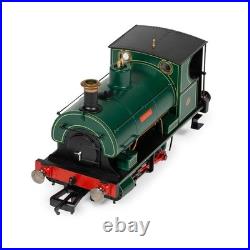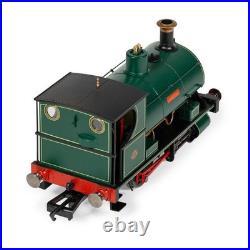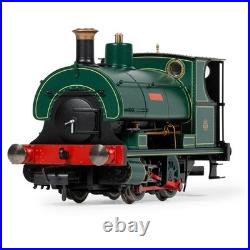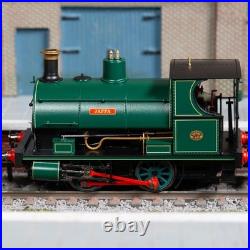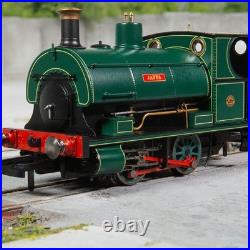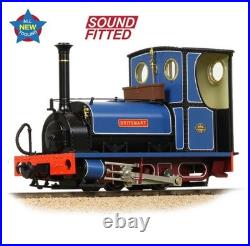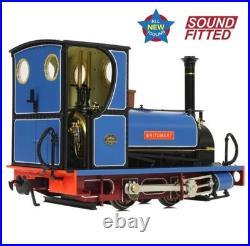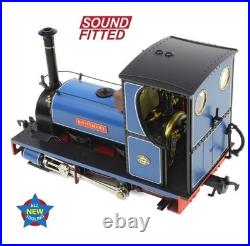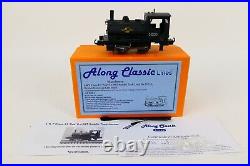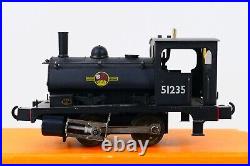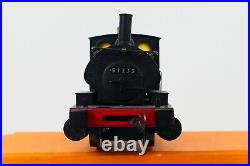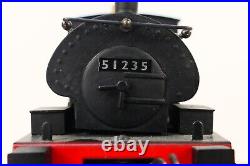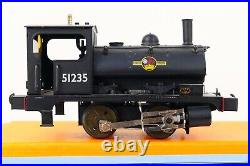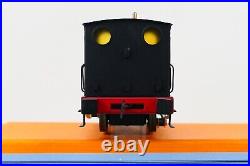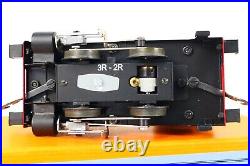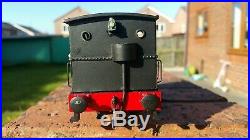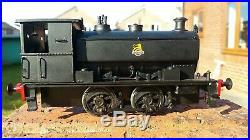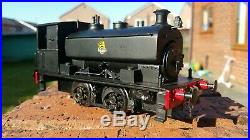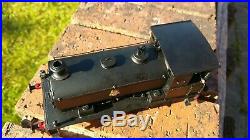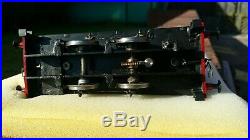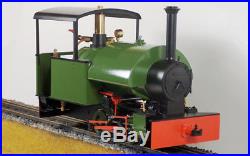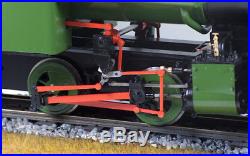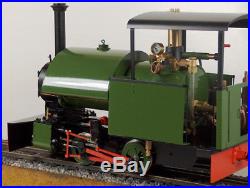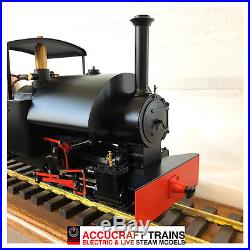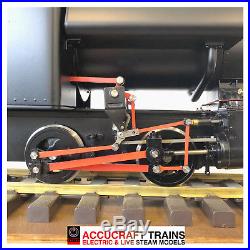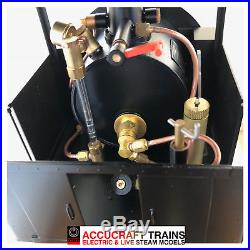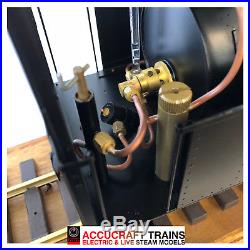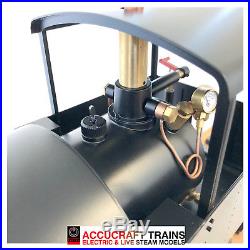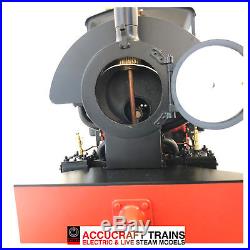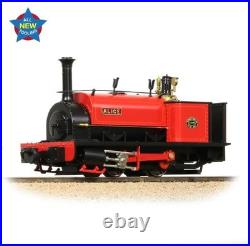
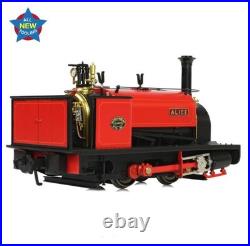
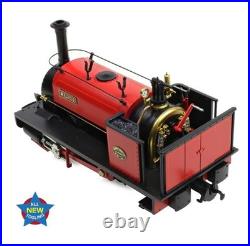

Bachmann 71-025 Quarry Hunslet 0-4-0ST Alice Dinorwic Quarry Red NG7 Scale – NEW. The following model and prototype information is taken from the Bachmann website. We are proud to present the iconic Quarry Hunslet as the launch locomotive for the new Bachmann Narrow Gauge NG7 Scale range. Depicting’Alice’, the locomotive built for the Dinorwic Quarry and after which the’Alice Class’ was named, this new model builds on the success of its smaller, award-winning Bachmann Narrow Gauge OO9 scale cousin. The larger NG7 scale affords a higher level of detail, along with an enhanced technical specification which includes a Next18 DCC decoder socket, pre-fitted speaker and firebox lighting system – which comes into full effect when the hinged firebox door is posed in the open position. With a diecast metal chassis and gearbox, coupled with a precision moulded plastic bodyshell, cylinder block, frames and footplate, the 0-4-0ST wheel formation is faithfully modelled, with authentically profiled wheels running in metal bearings which ensures smooth running. A wealth of separately fitted detail parts complete the model, including handrails, valves, springs, brake shoes and cab controls. All of this is finished with a high-fidelity livery application, using the latest techniques to capture every aspect of the prototype’s decoration. Coupling solutions provided with this new NG7 model include two types of chopper coupling and the hook and loop type used on Bachmann Narrow Gauge OO9 scale models – all of which attach via the NEM coupling pockets. Bachmann Narrow Gauge NG7 Scale. Pristine Dinorwic Quarry Red livery. Etched Name Plates and Works Plates included. Equipped with a Next18 DCC Decoder Socket – Recommend Decoder item No. DETAIL VARIATIONS SPECIFIC TO THIS MODEL. Dumb Buffers (two lengths supplied). Blower supply fitted to left hand side of locomotive. BACHMANN NARROW GAUGE NG7 QUARRY HUNSLET SPECIFICATION. Separate metal bearings fitted to each axle. Diecast metal chassis block. Diecast metal gearbox, with gearing arranged for prototypical running speeds and haulage capabilities. 5mm (NG7/O-16.5 narrow gauge) wheels to NEM310 & NEM311 standards with authentic profile and detailing. Detachable coupling pockets to NEM362 standards fitted at each end, into which a standard NG7 coupling is fitted (alternative couplings provided for optional fitting). Designed to operate on curves of first radius (371mm) or greater. Precision moulded plastic bodyshell, cylinder block, frames and footplate. Authentic outside-framed running gear with valve gear constructed completely from metal components. Highly detailed and decorated cab interior including separately fitted regulator, reverser lever, handbrake and gauge frames, and hinged firebox door which can be posed open/closed. Separately applied details including reverser, injectors, handrails, smokebox dart, whistle, brake blocks, springs, and tool brackets & Lamp Irons (where applicable). Each model supplied with a set of authentically decorated etched name plates and works plates. Each model supplied with an accessory pack including alternative couplings, bufferbeam filler plates and fire tools. Firebox Glow (on analogue) / Firebox Glow & Flicker (on DCC or when SOUND FITTED models are used on analogue). Next18 DCC decoder interface. Speaker installed in all models for optimum sound reproduction. Zimo MS590N18 DCC Sound Decoder fitted to SOUND FITTED versions. Sound files produced specifically for the Bachmann Narrow Gauge Quarry Hunslet using recordings from real locomotives. SOUND FITTED models operate on DCC and Analogue control as supplied. Authentic liveries applied to all models. Multiple paint applications employed on each model. Logos, numerals and text added as appropriate using multi-stage tampo printing incorporating authentic typefaces, logos and colours. QUARRY HUNSLET’ALICE’ HISTORY. The Quarry Hunslet locomotives were built by the Hunslet Engine Company of Leeds. Rather than denoting a single design, the term Quarry Hunslet refers to several different locomotive types, each built to a similar design, but with specifics suited to their intended use. These locomotives sported a 4ft wheelbase and the first example was delivered in 1883. Smaller than the Penrhyn locos with a wheelbase of just 3ft 3in, the second Dinorwic loco, delivered in 1889 and originally named’Alice’, would lend its name to the locomotive type and by 1904 eleven Alice Class Quarry Hunslets had been delivered to the Dinorwic Quarry. All were built to fundamentally the same design, although details inevitably changed over the years, but a notable feature of the Alice Class locos was the angled frames and resulting shallow bufferbeams at the front and rear. At the quarry the locomotives were moved between the various galleries and to and from works via the steep inclined planes – straight frames would bottom out on these steep inclines, a problem avoided by building the locos with angled frames. Five similar locomotives were built for use at Port Dinorwic during the same period, these shared much the same design as the Alice Class locos but had straight frames which resulted in them sporting much deeper bufferbeams. The Alice Class also provided the blueprint for six more engines which were built for smaller concerns; the Pen-Yr-Orsedd Quarry which took three, Moel Tryfan Quarry had two, and a single example was delivered to the Dorothea Quarry. The Penrhyn Quarry placed orders for four of these smaller 3ft 3in. Wheelbase locomotives too – these became known as the Penrhyn Small Quarry Class to avoid any association with their rivals the Dinorwic Quarry. Penrhyn Quarry would later order another six Quarry Hunslets, but these reverted to the 4ft wheelbase used on the Penrhyn Port Class locos; whilst very similar in design, this final batch of Quarry Hunslets were different enough to be known instead as the Penrhyn Large Quarry Class. The name’Alice’ was carried by two of the Alice Class Quarry Hunslets that were built for the Dinorwic Quarry. The first was works number 492 of 1889, the second locomotive to be delivered after’Velinheli’. Around 1908 the 1889-built locomotive was renamed’King of the Scarlets’. The second’Alice’, and the locomotive depicted by this Bachmann Narrow Gauge model, was the eighth of its type, built in 1902 as works number 780 and identified simply as No. Working on various levels at Dinorwic Quarry, by 1945’Alice’ had moved up to the Australia level some 1,800 feet above sea level where she remained for the rest of her working life – being recorded as out of service in 1960. Thereafter’Alice’ was plundered for parts to keep other locomotives working, and she was left abandoned in her shed on Australia level as the quarry closed in 1969. A new boiler had been constructed which was financed by the Leighton Buzzard Railway and after returning to steam,’Alice’ moved there, calling the Bedfordshire line home until 2003 when she moved back to the Bala Lake Railway.